

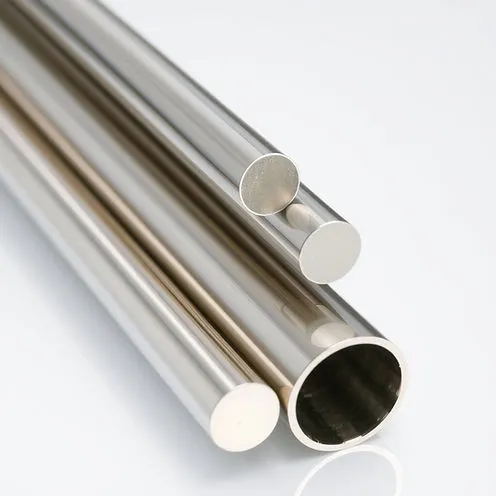
Picking the right stock shape means a lot when you plan to build jobs, most of all with smart shape memory metals. Nitinol Tube and Nitinol Strip are both materials of nickel-titanium alloy that have many of the same material properties, but are used for different engineering tasks. Designers, engineers and manufacturers can choose the form that is most suitable for the performance and functionality of their work by understanding the difference between these forms.
Understanding the Different Material Forms
Both products are manufactured from the same alloy, but due to different geometrical designs, their use in engineering applications is affected. A Nitinol Tube is a hollow cylindrical tube made from Nitinol material, which can be used for various applications such as producing internal passages in components, lightweight construction, or special mechanical functions.
A Nitinol Strip is manufactured as a straight strip of material that can be cut, bent or otherwise formed into a custom component. It is flat so it can be used when flexibility, surface area or precision fabrication are critical.
It’s not a matter of material choice, but of design needs and specifications.
When a Nitinol Tube Is the Better Choice
A Nitinol Tube is typically chosen for applications that demand a hollow design without compromising mechanical properties. It has a form that makes it suitable for use in assemblies that require a reduction in weight, fluid passageways or any other compact assembly.
Tubular components are typically selected for systems by:
-
Medical device development
-
Precision instrumentation
-
Aerospace systems
-
Laboratory research equipment
-
Industrial prototypes
-
Custom engineering assemblies
Tubular shapes are desired for difficult operating conditions, because of their shape memory characteristics and corrosion resistance.
Where Nitinol Strip Offers Advantages
When the design calls for a flat material, such as one that will be machined, cut or formed into a specific part, a Nitinol Strip is usually the preferred shape. This type gives flexibility in the manufacturing process and allows engineers to make parts with individual size requirements.
In research, prototype and precision engineering projects, strip material is often employed to ease fabrication of flat parts. It also provides lightweight components with the same mechanical properties for applications that demand them.
Its versatility makes it an excellent material for designers to work with and make changes to fit different engineering ideas.
Factors to Evaluate During Material Selection
Each engineering project has specific technical requirements, and it is always important to choose materials for the project application, not convenience.
These are some of the key factors to take into account:
-
Component geometry
-
Mechanical loading
-
Manufacturing process
-
Dimensional requirements
-
Operating environment
-
Assembly design
When engineers are considering the project, knowing these factors can help them decide which solution, Nitinol Tube, or Nitinol Strip, is more viable for the project.
Supporting Prototype and Production Development
Depending on the type of prototype involved, selecting materials may start in the prototype development process, when engineers test various methods of designing the product before it is mass-produced. Selecting the right material form at the outset can make production easier and minimize changes as the project progresses.
Specified dimensions and processing are available for both tubular and strip. Also, by close collaboration with experienced suppliers, the selection of the material ensures that it meets the production targets and engineering specifications.
This path boosts design work output and keeps the final part working strong over time.
Planning for Future Performance
When planning a main build, engineers check what a job needs today. They also check how well it runs down the road. The overall success of the finished component is due to its material durability, corrosion resistance, flexibility and manufacturing consistency.
Depending on the application, a Nitinol Tube or a Nitinol Strip may perform better, so determining which is used in the project will help engineers build products that will work reliably over their useful life.
Good planning early on in the material selection process can yield improved engineering results and more efficient production processes.
Conclusion
For those organizations interested in pursuing research and development projects involving advanced nickel-titanium materials, manufacturing projects, or precision engineering projects, regmetals.com offers insights into Nitinol Tubes and Nitinol Strip. Before production, assessing material form both ways aids in enhancing product performance, ease of fabrication and reliability in long-term operation. It is a common-sense method to work out what the best shape memory alloy solution is for your engineering problem by consulting with experts- materials specialists.
