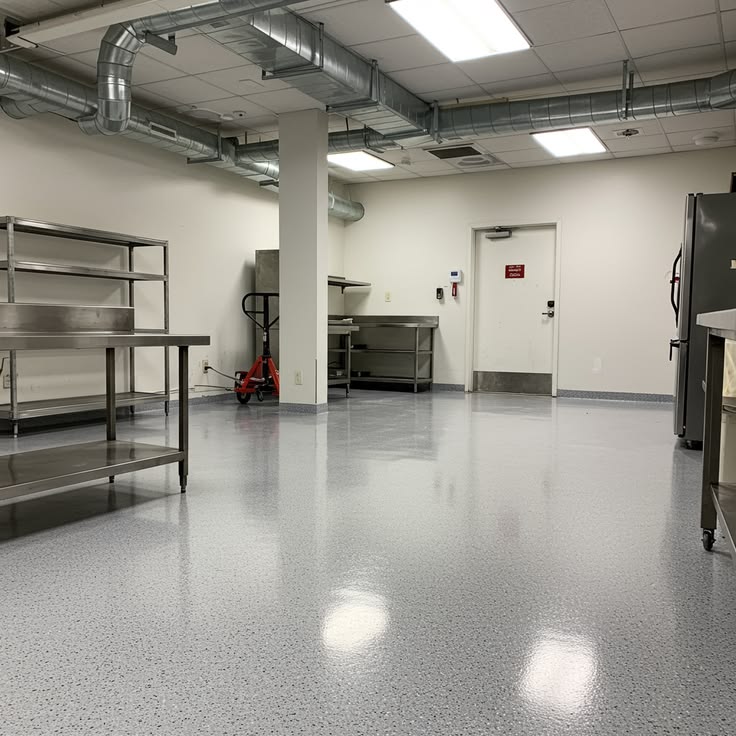
Commercial kitchens are demanding spaces. Floors deal with constant foot traffic, rolling carts, spills, heat, cleaning chemicals, and frequent washing throughout the day.
That is why choosing restaurant kitchen flooring should be based on real working conditions. Appearance matters, but durability, maintenance, safety, and preparation are usually more important over the long term.
Businesses planning a professional flooring upgrade can benefit from looking beyond the finish itself. A successful floor starts with understanding how the kitchen operates every day and which performance demands the surface will need to handle.
A Kitchen Floor Has to Handle More Than Foot Traffic
Restaurant floors rarely get a break. Staff members move quickly between preparation areas, storage spaces, sinks, refrigerators, and cooking stations during busy service hours.
Heavy equipment and wheeled carts can also place repeated pressure on the same areas. Over time, weak surfaces may become scratched, chipped, worn, or difficult to keep clean.
Moisture creates another challenge. Water, grease, food spills, and cleaning solutions can regularly reach the floor, making surface selection especially important.
Surface Preparation Should Never Be Rushed
Even a strong coating system can perform poorly when the concrete underneath has not been prepared correctly. Existing damage, contamination, cracks, or old coatings can interfere with adhesion.
Professional preparation may involve grinding the concrete, removing weak material, repairing cracks, and creating the proper surface profile. These steps help the new system bond more effectively.
Preparation also gives installers a chance to identify problem areas before the coating is applied. Addressing them early is usually better than trying to fix failures later.
Choosing Concrete Coatings for the Actual Environment
Not every commercial floor needs the same system. The best concrete coatings depend on how the room is used, how often it is cleaned, and what type of traffic it receives.
A busy kitchen may need a different surface texture from an office, showroom, or storage area. Slip resistance can become especially important where water or grease is commonly present.
The expected downtime should also be considered. Some businesses need flooring systems that allow them to return to normal operations sooner, while others can accommodate longer installation schedules.
Cleaning Requirements Matter From the Beginning
A floor can look excellent when first installed, but its value also depends on how easily it can be maintained. Commercial kitchens require regular cleaning, so that complicated surfaces can create unnecessary work.
Seamless or low-joint flooring systems can help reduce areas where dirt and residue may collect. Smooth transitions can also make routine cleaning more manageable.
However, the surface should not be selected only because it is easy to clean. Texture, durability, exposure conditions, and maintenance requirements should all be considered together.
Pay Attention to Drains, Corners, and Edges
Large open floor areas often receive most of the attention during planning. In practice, edges and transition points can be just as important.
Areas around drains, walls, doorways, and fixed equipment are frequently exposed to water and repeated cleaning. Poor detailing in these locations may create weak points.
Careful installation around these areas helps create a more complete flooring system. It can also improve the overall appearance of the finished space.
Plan the Project Around Restaurant Operations
Floor installation can interrupt normal business activity, especially when preparation and curing are involved. Restaurant owners should discuss the complete project schedule before work begins.
Equipment may need to be moved, certain areas may become temporarily inaccessible, and the floor may require a specific curing period. These details should be included in the planning stage.
A realistic timeline helps businesses arrange staff schedules, deliveries, cleaning, and reopening more effectively.
Long-Term Maintenance Still Matters
Durable flooring does not mean maintenance-free flooring. Routine cleaning and periodic inspection can help keep the surface performing well.
Spills should be cleaned promptly, and damaged areas should not be ignored. Small problems can become more difficult to manage when they are allowed to develop.
It is also useful to follow the installer’s recommendations for cleaning products and maintenance methods. Harsh or unsuitable products may affect some flooring systems over time.
Conclusion
Commercial kitchen flooring performs best when the decision is based on real working conditions. Slab preparation, coating selection, texture, moisture exposure, cleaning routines, and long-term maintenance all deserve attention before installation begins.
Businesses exploring professional concrete floor solutions can use huskycoatings.com as a useful reference when planning a surface suited to demanding commercial environments. A well-planned floor can support a cleaner, more practical, and easier-to-manage kitchen.