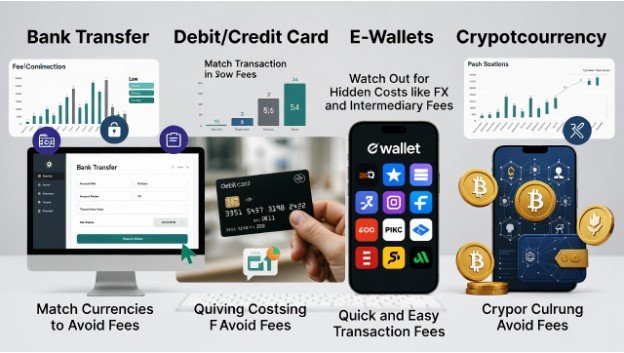
“Cash out without fees” is usually achievable only by matching the right withdrawal method to the casino’s rails and your bank’s incoming-fee rules: for most players, bank transfer (where supported) is the most consistently fee-free, card withdrawals are often fee-free but inconsistent, e-wallets can be fee-free yet sometimes introduce hidden costs (FX, intermediary fees), and crypto can avoid casino fees while still exposing you to network and conversion costs. The fastest way to get a genuinely free cash-out is to pick one method, keep your deposits and withdrawals on the same rail (to satisfy anti-fraud rules), and avoid currency conversion.
What “no-fee cash out” really means (and why it’s rare everywhere)
A withdrawal can be “fee-free” at one layer and still cost you at another. The total cost is the sum of four possible fee sources:
- Casino-side fees: explicit “withdrawal fee” or “processing fee.”
- Payment-rail fees: card scheme rules, bank transfer charges, crypto network fees.
- Intermediary fees: correspondent banks, payment processors, wallet-to-bank transfers.
- FX and spread costs: whenever your account currency differs from the withdrawal currency, including crypto-to-fiat conversion spreads.
Two practical implications:
- A casino advertising “0% withdrawal fees” doesn’t control your bank’s incoming wire fee or a wallet’s cash-out fee.
- “Fee-free” is easiest when account currency = withdrawal currency and the method supports local rails (for example, local bank transfer rather than international wire).
Quick comparison: 4 common withdrawal methods
Below is a fast, decision-oriented comparison focused on where fees typically appear and how to avoid them.
1) Bank transfer (local transfer or wire)
Best for: larger withdrawals, players prioritizing predictability over speed.
Where fees show up
- Casino: often fee-free above a minimum, but some charge per transfer or after a monthly limit.
- Bank: possible incoming transfer fee; more common with international wires than local transfers.
- Intermediaries: correspondent bank deductions can occur on SWIFT wires.
Speed and limits
- Typical: 1–5 business days depending on local vs international.
- Limits: often higher maximums than cards/wallets; minimums can be higher (for example, $50–$200 equivalent).
How to keep it fee-free (tactical checklist)
- Prefer local bank transfer rails (SEPA in the EU, FPS in the UK, etc.) over SWIFT wire when available.
- Use the casino account currency that matches your bank account currency to avoid FX.
- Ask your bank whether incoming transfers are charged and whether fees differ for domestic vs international.
- If you see “OUR/SHA/BEN” fee options on wires (payer/shared/beneficiary), note many consumer transfers default to shared/beneficiary, which can reduce what you receive.
Nuanced downside
- “No fee” can still mean less received if intermediary deductions occur, so the amount arriving may be slightly lower than the amount requested even when the casino didn’t charge you.
2) Debit/credit card withdrawals (Visa/Mastercard)
Best for: simplicity when supported; players who already deposit via card and want the same rail.
Where fees show up
- Casino: frequently fee-free, but card withdrawals are not universally supported in all regions.
- Bank/card issuer: typically no “incoming fee,” but some issuers treat certain credits unusually; rare, but worth checking.
- FX: can be expensive if the casino account currency differs from your card’s settlement currency.
Speed and limits
- Typical: 1–7 business days, and sometimes longer because card refunds/credits can batch.
- Limits: often lower than bank transfers; some operators restrict card withdrawals to “refund up to deposits,” routing profit via bank transfer.
Practical constraints that affect “fee-free” outcomes
- Refund logic: Many payment setups treat card withdrawals as refunds, which can cap the amount.
- Scheme/processor compatibility: Some issuers block gambling-related credits; you may be forced onto another method.
- Chargeback risk controls: Casinos may require withdrawals go back to the deposit method first, even if it’s slower.
How to reduce cost
- Keep casino account currency aligned with card billing currency.
- If the casino offers both card and bank transfer, use card for smaller amounts (when fee-free) and bank transfer for larger profits to avoid refund caps.
3) E-wallets (PayPal, Skrill, Neteller, ecoPayz, etc.)
Best for: speed and compartmentalizing gambling transactions from your bank account.
Where fees show up
- Casino: often fee-free to the wallet, but not always.
- Wallet: may charge for wallet-to-bank withdrawal, inactivity, or receiving certain transaction types (provider-specific).
- FX and spread: wallet FX can be material, especially if you deposit in one currency and withdraw in another.
Speed and limits
- Typical: near-instant or within hours once approved by the casino; bank cash-out from the wallet can add 1–3 business days.
- Limits: mid-range; higher tiers may require additional verification.
Hidden cost pattern to watch (common real-world scenario)
- You withdraw “fee-free” to the wallet, then pay a wallet fee to move it to your bank, plus an FX spread if your wallet and bank are in different currencies. The casino withdrawal looks free, but the end-to-end cash-out isn’t.
How to keep e-wallet cash-outs genuinely low-cost
- Maintain the wallet in the same currency as your casino account.
- Check whether the wallet charges different fees for bank transfer vs card cash-out from the wallet.
- Avoid frequent small withdrawals; if the wallet charges a fixed cash-out fee, batching reduces the effective percentage cost.
Operational nuance
- Some casinos restrict bonus winnings to specific withdrawal methods. If the method allowed for withdrawal differs from your deposit method, you may trigger extra KYC steps, extending time-to-cash even if fees are zero.
4) Cryptocurrency withdrawals (BTC, ETH, LTC, USDT, etc.)
Best for: fast settlement, international players, and those who can manage conversion carefully.
Where fees show up
- Casino: often “no fee,” but some charge a handling fee or set minimums that effectively penalize small withdrawals.
- Network: blockchain fees vary widely; they are not controlled by the casino.
- Conversion: if you need fiat, the exchange may charge trading fees plus spread; bank withdrawal from the exchange can add fees.
Speed and limits
- Typical: minutes to a few hours after approval, plus network confirmations.
- Limits: can be high, but minimums may also be high relative to cards.
How “no-fee” becomes expensive
- Withdrawing on a congested network can cost meaningful amounts. For example, an ERC-20 token transfer can be several dollars (or more) during peak times, making small cash-outs inefficient.
- Stablecoins reduce volatility but not necessarily fees; network choice matters (TRC-20 vs ERC-20 can differ significantly in typical fees and congestion patterns).
Tactical ways to lower crypto cash-out cost
- Choose lower-fee networks when the casino supports them (for example, LTC or certain stablecoin rails), and avoid peak congestion windows.
- If your goal is fiat, compare total conversion cost: trading fee + spread + bank withdrawal fee from the exchange.
- Use the correct address and network every time; a mistake can turn “free” into “lost.”
Risk nuance (often overlooked)
- Even if fees are minimal, price movement between withdrawal initiation and conversion can dwarf fee savings unless you use stablecoins and convert promptly.
How to choose the best “no-fee” method in 60 seconds (a practical decision flow)
1) Match currency first. If your casino account is in EUR, withdrawing to an EUR bank account or EUR wallet avoids FX leakage that can exceed any explicit fee.
2) Check the end-to-end path. Ask: “What does it cost to get from casino balance to my everyday spending account?” A fee-free wallet withdrawal isn’t fee-free if wallet-to-bank costs 2%.
3) Pick the rail that fits your withdrawal size.
- Small, frequent: e-wallet or card (if truly supported and fee-free) can minimize fixed fees and delays.
- Large, occasional: bank transfer often minimizes percentage-based costs and offers clearer records.
- Cross-border or speed-sensitive: crypto can be efficient if network and conversion are managed.
4) Avoid method switching. Depositing by card and withdrawing by bank may be required for profit portions, but unnecessary switching can add KYC friction and delay.
For operational clarity, it helps to compare which casinos support which rails and which games are eligible under different bonus and withdrawal rules; for example, Read More here on how game filtering system categorizes casinos by features that can indirectly affect cash-out friction, such as supported payment methods and processing constraints tied to game contributions.
Fee traps that make “free” withdrawals cost money anyway
- Minimum withdrawal thresholds: If the minimum is $100 and you regularly cash out $120, a $10 bank incoming fee is effectively 8.3%.
- Dormant-account or inactivity fees: Some wallets deduct balances after inactivity; leaving funds parked can convert “free” into negative carry.
- Name mismatches and failed withdrawals: A rejection can mean re-processing delays and sometimes extra bank charges on returned transfers.
- Weekend and cut-off timing: A “24-hour processing” promise may exclude weekends; delays can matter if you’re converting crypto or if your bank charges for multiple inbound transfers in a month.
- Multiple monthly withdrawal fees: Some operators offer a set number of free withdrawals per month, then charge thereafter—batching withdrawals can keep you under the free quota.
Verification and compliance: the non-fee factor that determines your real cost
Even when fees are zero, time is a cost. The smoothest fee-free cash-out usually happens when:
- Your KYC is completed before requesting the first withdrawal.
- Your deposit and withdrawal method share the same ownership details (same legal name, same country).
- You keep proof-of-funds documents ready for larger withdrawals (bank statements, wallet screenshots, exchange statements for crypto).
If the goal is “cash out without fees,” the most reliable path is the one that also minimizes re-checks and reversals: match currencies, keep methods consistent, and choose the rail whose hidden costs (FX, intermediaries, network, wallet cash-out) are lowest for your specific withdrawal size and timing.